Examples from the tradition
Warmth and ease at home — smoother conversations, shared gratitude, and a household that feels held together.
These are general examples, not your personal plan. Your reading selects practices from your chart and the time, budget and preferences you share.
The mantra
Om Namo Narayanaya — A mantra to Narayana for peace and togetherness at home.
Morning
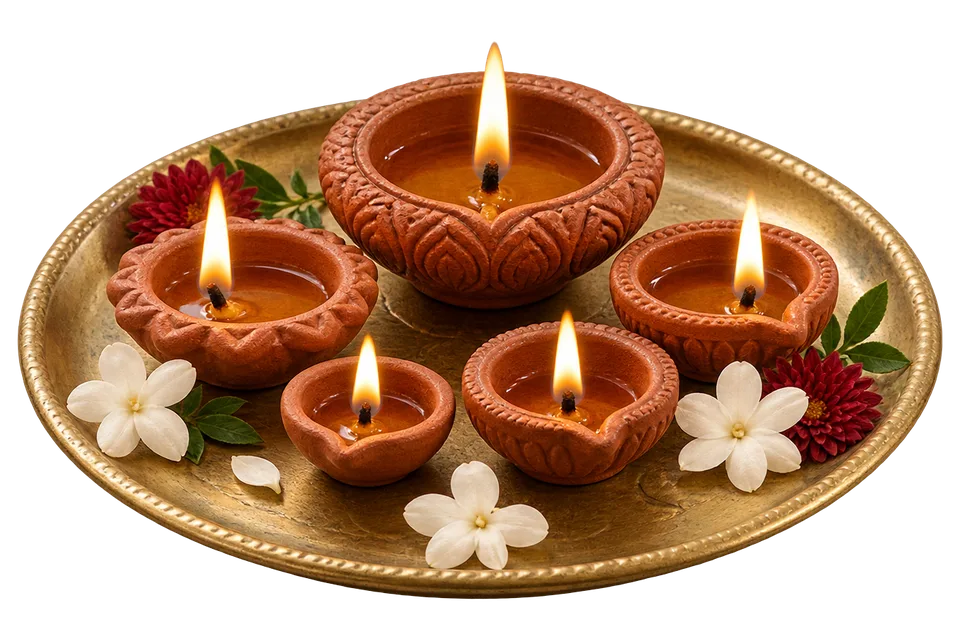
Light a lamp for the family's wellbeing.
Through the day
A kind word or small help for someone at home.
Evening
Share one thing you're grateful for, together.
Once a week
Keep a Satyanarayan katha or a shared prayer. Offer anna daan as a family.
Once a month
Notice one relationship that has eased. Consider a small Vastu adjustment for the shared space.
What a reading holds here
- 01
You weight it
Your ratings and context select up to three priorities for the reading. An area you mark zero is not selected.
- 02
The chart answers
The reading names what is at work, the window it runs in, and what is unclear. A missing field removes its line rather than inventing one.
- 03
The plan asks
Remedies are filtered to the time and means you said you have. On day 30, day 60 and day 90 the same questions are asked again, and the answers are compared.
What the chart looks at for this concern
In Jyotish, family readings consider the houses and significators associated with the particular relationship. Pitru dosha concerns ancestral obligations and blessings, with its chart rules taught through different lineages. Rare You presents available provider chart fields alongside the family context you share, keeping both parts of the reading clear.
What a 90-day plan does
A ninety-day plan keeps your family concern rating and available devotional practices in one record. At days 30, 60 and 90 you answer the concern questions again through self-reported ratings. Traditional ancestral observances include shraddha, tarpana and remembrance; follow your family's customs with guidance from a trusted priest.
What it cannot do
Rare You's reading service does not include mediation or legal representation for family disputes. Give communication, consent and safety their own attention alongside family devotion. Ask a qualified counsellor for relationship support or a lawyer for inheritance, custody or other legal questions, and keep important documents and deadlines organised.
Understand the reading terms
What is dasha in Vedic astrology?
In Jyotish, a dasha is a planetary period that shows when a graha's influence becomes active in the unfolding of a birth chart.
What is a nakshatra or birth star?
A nakshatra is one of 27 equal divisions of the sidereal zodiac; a birth nakshatra is the division containing the Moon at the birth moment.
Birth time unknown: what can you still do?
An unknown birth time means the recorded clock time is missing, so Rare You reads from the Moon sign (Chandra lagna); an exact clock supports a lagna reading.