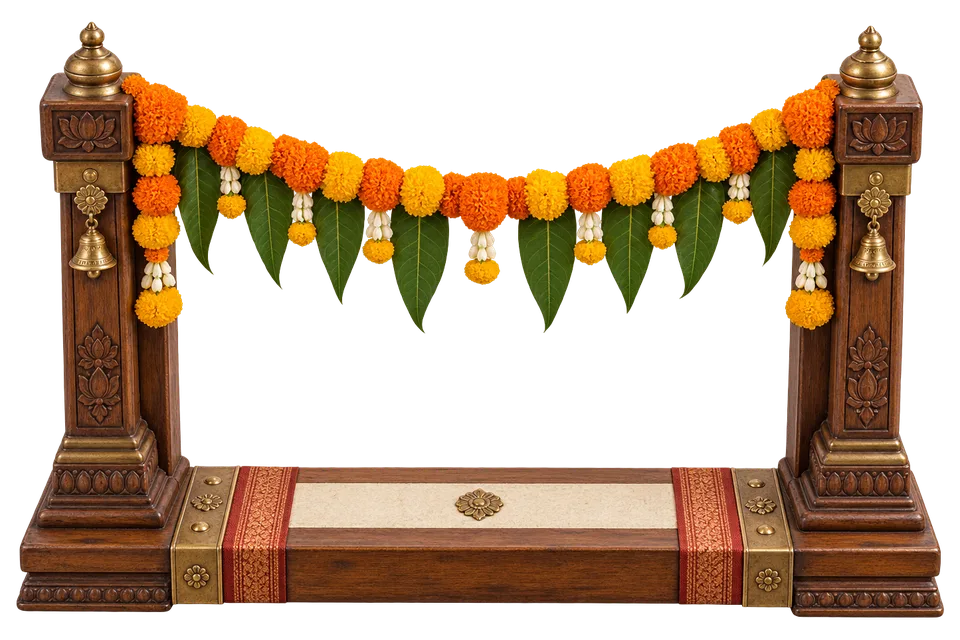
Examples from the tradition
A home that feels right — balanced energy, an auspicious threshold, and spaces that support rest and growth.
These are general examples, not your personal plan. Your reading selects practices from your chart and the time, budget and preferences you share.
The mantra
Om Gam Ganapataye Namah — Invoked at the threshold for an auspicious, settled home.
Morning
Light a lamp at the home's entrance or altar.
Through the day
Tidy one corner with attention.
Evening
A short prayer for the home's peace.
Once a week
Sprinkle a little gangajal at the entrance. Consider one room's Vastu balance.
Once a month
Check the muhurat for any home event (griha pravesh, repair). Review the home's flow with a Vastu lens.
What a reading holds here
- 01
You weight it
Your ratings and context select up to three priorities for the reading. An area you mark zero is not selected.
- 02
The chart answers
The reading names what is at work, the window it runs in, and what is unclear. A missing field removes its line rather than inventing one.
- 03
The plan asks
Remedies are filtered to the time and means you said you have. On day 30, day 60 and day 90 the same questions are asked again, and the answers are compared.
What the chart looks at for this concern
In Jyotish, the fourth house and its lord concern home, property and domestic happiness. Their planetary relationships and relevant dashas guide the natal reading. Rare You reports available personal chart fields for your home concern; building inspections and floor-plan assessments are separate services outside this personal reading.
What a 90-day plan does
The ninety-day plan records available devotional practices and repeat self-reported ratings of your home concern. Your baseline and later check-ins keep your experience of home visible. Give prayer a regular place alongside planning for repairs, accessibility, household agreements and moving costs, with practical tasks recorded where useful.
What it cannot do
Structural inspection, property approval and tenancy casework are outside Rare You's personal reading service. Use qualified building professionals for physical defects, a lawyer for contracts or rights, and a qualified financial adviser for affordability questions. Keep the relevant inspections, documents and household discussions in place alongside your spiritual routine.
Understand the reading terms
What is dasha in Vedic astrology?
In Jyotish, a dasha is a planetary period that shows when a graha's influence becomes active in the unfolding of a birth chart.
Birth time unknown: what can you still do?
An unknown birth time means the recorded clock time is missing, so Rare You reads from the Moon sign (Chandra lagna); an exact clock supports a lagna reading.
What is Rahu Kaal, and how is it calculated?
Rahu Kaal is a weekday-dependent eighth of local daylight that is traditionally avoided when choosing a time to begin certain auspicious activities.