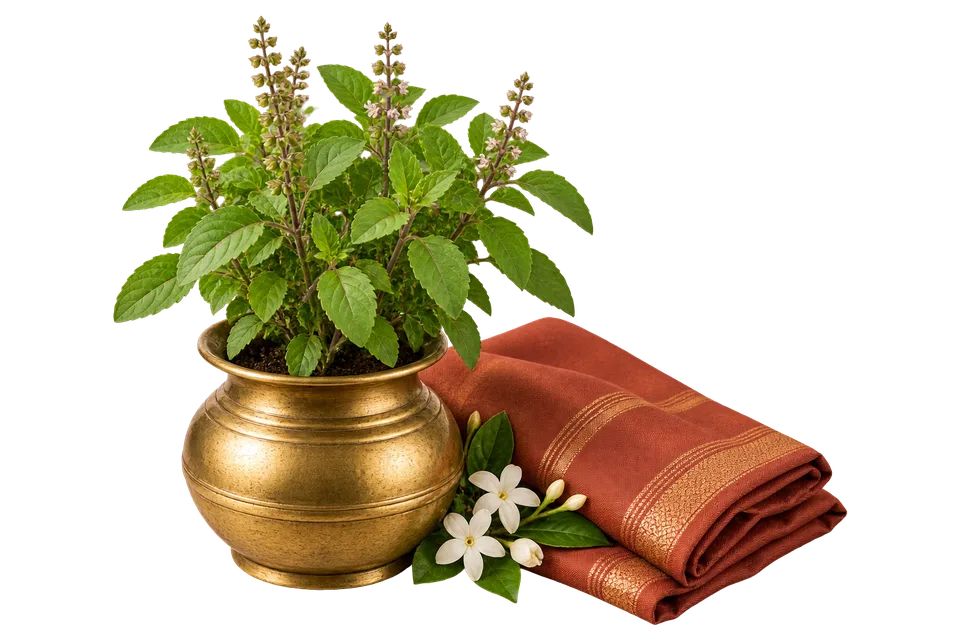
Examples from the tradition
Vitality and protection — supporting recovery, steadying your energy, and a sense of being watched over.
These are general examples, not your personal plan. Your reading selects practices from your chart and the time, budget and preferences you share.
The mantra
Om Tryambakam Yajamahe — The Maha Mrityunjaya mantra — turned to for healing and protection.
Morning
A minute of slow breathing with the Mahamrityunjaya line.
Through the day
One nourishing, mindful choice for the body.
Evening
A short prayer for protection and good rest.
Once a week
Have a Maha Mrityunjaya jaap performed or sponsored. Offer gau seva or anna daan.
Once a month
Review your energy and rest honestly. Light a ghee lamp for a recovering loved one.
What a reading holds here
- 01
You weight it
Your ratings and context select up to three priorities for the reading. An area you mark zero is not selected.
- 02
The chart answers
The reading names what is at work, the window it runs in, and what is unclear. A missing field removes its line rather than inventing one.
- 03
The plan asks
Remedies are filtered to the time and means you said you have. On day 30, day 60 and day 90 the same questions are asked again, and the answers are compared.
What the chart looks at for this concern
In Jyotish, wellbeing readings consider the lagna, its lord, the first, sixth and eighth houses, and the running dasha within the complete chart. These factors guide the traditional discussion of vitality and challenges. Rare You presents available provider chart fields; diagnosis and clinical assessment are outside its reading service.
What a 90-day plan does
A ninety-day plan records available spiritual practices and your self-reported health concern ratings. The repeated questions form a personal check-in record at days 30, 60 and 90. Keep prayer and devotional practice alongside the clinical monitoring, appointments and prescribed treatment you follow with your healthcare professional.
What it cannot do
Medical diagnosis and treatment are outside Rare You's reading service. Speak to a doctor about symptoms and follow professional advice. Seek urgent medical help when needed; keep medical appointments and prescribed treatment in place. Give your devotional practice a comfortable rhythm alongside care, with rest and your daily needs in mind.
Understand the reading terms
What is dasha in Vedic astrology?
In Jyotish, a dasha is a planetary period that shows when a graha's influence becomes active in the unfolding of a birth chart.
What is Sade Sati?
In Jyotish, Sade Sati is the roughly seven-and-a-half-year period when Saturn transits the signs immediately before, at and after the natal Moon sign.
What is Rahu Kaal, and how is it calculated?
Rahu Kaal is a weekday-dependent eighth of local daylight that is traditionally avoided when choosing a time to begin certain auspicious activities.